| Suscríbete vía RSS

We have Moved

We Have moved go to www.grindtodeath.com ! So head on over now!

Looking for An Answer

Showing posts with label Peter Hinson. Show all posts

Thursday, 21 April 2011

Film Review: All Good Things

| |
Indecision is a destructive trait in any area, and is often deadly in film. All Good Things really can’t decide what it wants to be, odd considering it’s based on true events and proudly states this at the bookends of the film. But its indecisiveness unintentionally runs parallel with the indecision of its story and characters.

The story is directly based on Robert Durst a wealthy son of a New York real estate mogul. He witnessed his mother’s death at a young age and predictably was never the same. He was eventually arrested and tried for murder in 2003 and is suspected to be involved in other unsolved crimes linked to the Durst family. He is portrayed in the film by Ryan Gosling but the character name is changed to David Marks (all other characters based off of real people also have their names changed). Early in the film we see him rebel against his upper class roots. He marries a girl from a humble working class background, Katie McCarthy (Kirsten Dunst), they move to the country together and seemingly live their happiest days together. They set up a health food store naming it “All Good Things”. But the shop and their whole life style is being funded by David’s dad Sanford Marks (Frank Langella) who is constantly trying to encourage David to come and work for the family business, which he eventually does.

In enters the indecision, he chooses the job based on feelings of obligation rather than need or want. His wife didn’t want him to do it, and he has ultimately doomed their happiness. But impending doom is weaved into the narrative before even their fairy-tale like time in the country. Marks is shown mumbling to himself incoherently, and it’s established early on that he was present for his mother’s suicide. The film utilises a framing device to show this, it flashes back from David at his trial to the events that lead him there, with Gosling looking surprisingly convincing in old man makeup. His dark past and questionable psyche makes his romance with Katie tragic, she is initially blissfully unaware but her realisation changes her character for the worst.

Dunst portrays her as the epitome of sweetness. She is completely sincere and hides nothing, she is initially intrigued by his unique differences but eventually becomes aware of just how deep they go and what they are rooted in. He never talks about himself to her and she marries him without ever knowing about his mother or his personal demons. She is at last enlightened by David’s long-time friend Deborah Lehrman (Lily Rabe). Who breaks the information in an overly sunny and blasé fashion, when seeing Marks’ other female friends his choice of Katie as a wife seems far more puzzling. His mysterious past slowly breaks free of its repression following the revelation that Katie is pregnant, finally showing his rage tinted colours and requesting with no real reasons that they shouldn’t become parents. Indecision again with Katie being torn over whether to proceed with an abortion. Adding to the already incredibly dark tone, with a work obsessed David regrettably absent. The sweet and hope filled girl she once was dies, another victim of his scarred mental state.

The first two thirds of the film revolve almost solely around the tragic romance of David and Katie. They clash over her decision to pursue a medical career. It constantly builds and builds with the viewer painfully aware that this cannot end well. His long hidden dark emotions emerge often because of their dying relationship. His worst actions are left ambiguous, remaining off-screen; we are only shown Katie’s true terror at their aftermath. Their relationship is truly interesting and you really fear for her as well as sympathise with David because of his demons. This makes the sudden shift the film takes all the more worse. The shift links into the seeming indecision that the film has. For the first hour it chronicles a tragic romance, but from then on every aspect of it shifts. The narrative techniques, the time period, characters, everything. It turns into a far less compelling film, becoming a poor crime mystery genre film that sees David go on the run. Now, I’ll avoid spoilers as best I can but I have to write about this part of the film because it’s a significant chunk of the narrative and not a twist ending. Marks’ is suspected of various things and decides to flee to Texas, where he is seen in a costume far less convincing than his old man one but deliberately so. He meets Melvin Bump (played by will-always-be-the-library-detective-from-Seinfeld, Philip Baker Hall) and shit goes down.

The films indecisiveness is painfully apparent in its concluding third. It’s debatable that the awkward shift is unavoidable due to the true basis of its story. But All Good Things doesn’t seem to have any problems taking liberties with aspects of the story other than this. Who did what and why within the criminal acts in question are played around with endlessly. They have never been proved in real life but the film isn’t hesitant in pointing the finger at those it believes committed them. It changes and fabricates what it needs to in order to make the story more compelling, but this doesn’t prevent the incredible drop off in quality in the films closing chapters. Which are a little stupid and mostly uninteresting, the dark tone inexplicably lightens given the subject matter and it arrives at its feature length running time not at a stride but crawling on bloody stumps.

It’s not due to lack of talent that the film concludes as lacklustre. I hadn’t heard of director Andrew Jarecki before but his previous work (Capturing the Friedmans) was nominated for the Academy Award for Documentary Feature. His direction is simply fine; with rare shots verging on fantastic (particularly the shot of Marks’ sitting at his desk as a building is constructed behind him). Ryan Gosling is one of the best young actors working today but he never really gets to show it. He gets the frustrated and demon filled side of David Marks’ down but never gets to embody an all the way snapped version of him, with the director instead opting for ambiguity. Dunst is fine as the sugar sweet Katie but her downfall is never really more than a few depressed expressions. The mystery was never solved in reality and the film decisions to incriminate its characters are far too predictable, it throws some red herrings into the mix but they’re not overly effective. It just can’t decide if it wants to be a romantic drama or a crime mystery.

The troubled and tragic romance of David and Katie Marks is a compelling plot point, it promises a thrilling pay off that just never materialises. It has similarities to another Ryan Gosling drama/romance film: Blue Valentine, and if anything All Good Things made me realise how good that film actually is. It’s two thirds a decent film but the conclusions commit a greater crime than any committed by its characters.
Read more >>

Thursday, 14 April 2011

Film Review: Source Code

| |


Science Fiction has its droves of devotees, but it has become such a broad term that Sci-Fi fans continue to do what they do best and moan up a storm about its current state. Inception had elements of it, and the Star Trek reboot was packed with it. But many of these somewhat Sci-Fi films cater more for the mainstream than the people with Silent Running posters on their walls. Their plots are based around fantastical technology over its theoretical possible counterpart. Then in 2009 we got Moon, a reclamation of the Sci-Fi genre by one of its biggest devotees: Duncan Jones. Well we all think he’s a devotee but in truth he became the Science Fiction Messiah so quickly that we’re still learning about him. I’m one of the legions of people that can easily wax poetic about Moon. Explorations of solace, morality and identity amidst a rich Sci-Fi background fronted by Sam Rockwell and scored by Clint Mansell, it was mind blowing. Even its film poster is one of my all-time favourites. Blatant homages and use of genre tropes made it an instant modern Sci-Fi classic. With its story revolving around the mining of Helium-3 it possessed scientific accuracies that even NASA had to admit were impressive (the film was screened for NASA at their request). All eyes were on Jones following one of the strongest directorial debuts in recent years, he reeked of potential and now had a budget big enough to show it.

Source Code is a testament to the broadness of the Science Fiction tag, while Jones had originally been at the forefront of those seeking a return to storytelling based in the technological potential of the human race, Source Code exists comfortably as a more fantastical narrative. The technology that drives the plot could never happen; it exists merely as a way to explain and ground something that is often a mystical occurrence. Brief techno babble explanations are given to allow more time for action. It’s not a natural progression from Moon but Jones maintains his Sci-Fi crown for the time being, saved by the wide criteria of his favourite genre. Source Code is a thriller film, it dedicates little time to what powers it and instead opts for a popcorn action feel.

Captain Colter Stevens (Jake Gyllenhaal) opens his eyes to find himself on a Chicago train. He has no memory of what brought him there. The beautiful stranger opposite him however seems to know him, but not as the person that he thinks he is. She is Christina Warren (Michelle Monaghan) who is apparently a friend of his, but why is she calling him Sean and why does the ID in his wallet say Sean Fentress? You don’t want to know these answers before watching the film so you might want to stop reading. I’m not going to spoil any major plot points but knowing nothing at all will certainly help your enjoyment. Colter is meant to know nothing and unravelling the plot along with him must be the best way to approach the film. This is unfortunately a luxury that the current state of film trailers deprived me of.

Overwhelming confusion and disorientation leads him to the trains’ toilet, and a reluctant stare into the mirror confirms his fears. He isn’t Captain Colter Stevens. The man looking back at him is Sean Fentress, who is visually represented as a different actor in reflections to achieve this effect. The Gyllenhaal-less reflection only makes his state of mind more fucked and before we can speculate if he’s insane or not he’s dead as an explosion rips through the train killing everyone aboard. Yet he now finds himself suspended in his familiar army attire in an unfamiliar chamber. He is now himself but this mental health shattering morning continues when Captain Colleen Goodwin (Vera Farmiga) appears on a screen and demands to know who destroyed the train. Finally granted a reprieve by proving he knows nothing, this poor man is made privy to exactly what the fuck is going on with extensive exposition. He is inside Source Code a program that allows a participant to exist within the last eight minutes of a person’s life. Entrants maintain their free will, and can move freely and take actions that the original possessor of the memories didn’t do. Colter just experienced the last eight minutes of Sean Fentress’ life. A passenger who was killed on a train bombing that morning. The attack was the first in series of proposed attacks in Chicago with the attackers responsible promising to make their next suckers nuclear. Colter must go back into the Source Code and locate the bomber so the following attacks can be prevented. He remains unsure but is quickly convinced to serve his country and retries the Source Code. Several repetitions of Fentress’ final minutes are seen with Colter’s growing familiarity of it becoming a vital part of his arsenal.

Source Code finds time to explore themes of human relationships and the concepts of strangers in spite of its rapid pacing. The rapidity doesn’t even phase its romance subplot; Colter has intercepted a budding relationship between Sean and Christina, with him seemingly awakening in the middle of one of their many flirtatious conversations on their daily commute. Christina has been waiting for him to make his move, mistaking Colter’s weird behaviour for a new found spontaneity in Sean. All the groundwork has been done, enabling Colter to come in and sweep her straight off of her feet. Colter can see it and seeing her openly forward interest in him his own interests change suite, setting himself the task of saving her and everyone aboard the train by ignoring insistences that he can’t change the past. It’s a unique romance, from Christina’s perspective it’s completely just. She has all the pretext. Colter develops his romantic interest through a series of eight minute sequences with her memory being reset every time. He must have the perfect eight minutes to get what he wants. You can argue that he’s taking advantage of her, negating to tell her that he isn’t the man she originally fell for; this could’ve destroyed the romance plot thread if it weren’t for Gyllenhaal’s abundance of charm.

Jake Gyllenhaal is much more of a drawing force for Source Code than Duncan Jones is, and he rightly gets to play leading man. His performance seems a result of a collaboration with Jones rather than of following instructions. An approach similar to how he worked with Sam Rockwell in Moon. Jones lets the film be actor lead rather than an auteur piece. The direction is brilliant but the character is as Jake Gyllenhaal as any of his other performances, semi-serious and light hearted. With such a high concept anything else would be unwise, in a reality with no consequences why would you have any fear of, or a regard for public perception? Humanity bleeds into his character during emotional revelations that break down any concerns over his number of dimensions. Developing from maniac confusion to gleeful exploitation his character is a joy to watch. Ridiculously gorgeous Michelle Monaghan is another highlight with her repeated flirtations never failing to be sweet and Vera Farmiga adds an unavoidable ethical element with her torn loyalties.

Jones has created a more modern Sci-Fi film rather than following the themes established in his revivalist debut. This change in focus may not be a necessarily conscious one as Source Code wasn’t penned by him unlike Moon, it was written by newcomer Ben Ripley. While it’s a great script you have to think that Jones is producing other people’s scripts as a way of further proving himself. He got to show what he can do with a substantial budget but not with one of his own scripts and when that project happens it’s going to be exciting. He’s a great director of actors and his traits can now be identified as his body of work increases, including a strange auteur identifier involving Chesney Hawkes and beautiful uses of freeze frame. Source Codes presentation is pretty seamless, with only mild and unimportant niggles residing in an ending that would’ve benefited from a better sense of ambiguity and an incredibly mixed musical score: which shouts loudly in your face to remind you you’re in an action film.

Jones moves onwards on his quest to make interesting Science Fiction films. A quest that he has so far achieved in both Indie and big budget studio contexts, considering he’s a newcomer in both areas that’s impressive. His second feature is a form of intelligent filmmaking that’s worth reliving again and again.
Read more >>

Thursday, 7 April 2011

Film Review: Panic Room

| |
The filmography of David Fincher is downright strange if you look at it long enough. Sort of when you look at a common word closer than usual and it freaks you out. He’s made modern day classics such as Fight Club and Seven, but sitting right next to them is Alien 3 and the Oscar baiting The Curious Case of Benjamin Button (13 Nominations, 3 Wins). I like both movies just fine, but it kind of blows my mind that this revolutionary director could have made an inoffensive humble film about a man who ages backwards, on top of the third instalment in the Alien series (which I do like more than most). Regardless of how ground-breaking his films are they are all pretty damn solid. But there was one that insinuated being an even bigger black sheep than the rest. Fincher’s 2002 film Panic Room.

For a long time this was the only David Fincher film that I had never seen, and for an even longer time I had no idea that he had directed it. When I was 11 or 12 I have a random memory of sitting in the back of my Dad’s car when a blockbuster advert came on the radio plugging the new DVD releases. One of these was Panic Room, I don’t remember anything that was said about the film other than a brief plot outline and actors names that meant nothing (they probably said “thrilling” too much also), but for some reason this memory has stuck with me. My memory tends to work like that with me having recollections of some of the most mundane things. This distinctive memory has always given me a heightened interest in the film. I didn’t beg my parents for it or anything, and it wasn’t constantly at the forefront of my mind but I definitely maintained a curiosity about it.

Not until my interest in film increased did I finally see it. It wasn’t until I saw Zodiac that I took notice of exactly who David Fincher was, I had seen Fight Club and Seven, feeling like I knew what points they were trying to make under the surface. But I never considered them being made by the same person, the whole concept of an Auteur never really crossed my mind until I was maybe 15 and discovered Martin Scorsese. So here I was looking at Fincher’s filmography and there was Panic Room, and again I didn’t rush to watch it. Mainly because I had never actually heard a good thing about it and my only knowledge on it was based on some half recalled mundane occurrence. Then I saw The Social Network and that being as good as its dialog is fast I delved into all things David Fincher once again and finally watched it.

It’s a thriller through and through, even resembling an indie film with b-movie leanings. Strange when considering it had as reported budget of 48 Million Dollars. There are definitely minimalist elements which give the film an interesting style when viewed solely as a David Fincher film. It is set almost entirely in the same New York Residence, with only the film’s opening and ending showing different locations. Fight Club went just about everywhere, with Tyler Durden’s jet setting ways being a major part of the plot. This has 1 major location where 99% of the story takes place. You almost get the impression that Fincher wanted a break after Fight Club and chose a project where he could stay in the same place for a few months (as Fight Club precedes Panic room in his Filmography). Fincher gets to show his directorial talents in a completely new way. Just how can you make a film visually interesting when the same interiors are in almost every shot? He easily answers this. He mixes several styles giving the film a unique edge. Impossible camera movements, that can only be digital, see it flying through walls, floors and objects, anything really, physical space is treated as a non-obstacle. The long take that follows the criminal’s ascent up the exterior of the building from the interior is a fantastic watch. Mixed with this style is a more standard directorial approach that captures the criminal’s intense relationship with one another, and finally realist footage from the houses security system viewed from within the panic room.

Oh yeah, the panic room. While seeing past my directorial love affair with David Fincher is hard this film actually does have a story. Recent divorcee Meg Altman (Jodie Foster) and her young daughter Sarah (Kristen Stewart) have just moved into a big ass New York residence. Prior to this a scene sees them being shown around and told about the previous owner, a paranoid millionaire. His paranoia resulted in him installing a panic room (actually called safe rooms but that doesn’t make for a catchy title). On their first night in their new residence a trio of criminals break in. They are: grandson of the previous owner Junior (Jared Leto), a security company employee Burnham (Forest Whitaker), and unpredictable third party Raoul (Dwight Yoakam). This three are there to steal an ever changing amount of money (due to Junior’s ever changing honesty) from the panic room. They of course discover the sleeping Altman’s and decide to continue regardless, but they alert the two who run to safety and lock themselves in the panic room. They want what’s in that room and construct various attempts to expel them from the room. The remainder of the film sees a cat and mouse like story between the girls and the criminals, with the sides changing on occasion.

The story isn’t amazingly original but it has enough twists and turns to maintain interest. It initially appears to run the risk of viewers feeling frustrated at the actions the characters are taking, but it is refreshing to see characters that aren’t flawed by their own stupidity. They act how you would expect them to in these extraordinary situations. They aren’t the stupid victims that you would find in a generic slasher film, they act with a form of intelligence on both sides of the moral spectrum. This is aided by the films strong acting talents. Foster exhibits both a distraught mother and a quick thinking survivalist ultimately handing in a solid performance. You genuinely believe that a middle aged mother is a worthy opponent for an armed criminal. Her on screen daughter Kristen Stewart plays the exact level of fear and boldness that the story requires, it’s in line with her age rather than her being inexplicable wise beyond her year as many child actors are. The criminals crumbling unity is rightfully shown as inevitable. Leto embodies pure greed, Yoakam pure psychosis and Whitaker pure reluctance but need. Their mistrust makes their ability to be felled and overcome believable.

Despite my history with the film I never really expected it to be up to much, so my expectations were unaffected by my long standing curiosity in it. I went in neutral and was surprised. It’s your standard Hollywood thriller film brought above average by its brilliant direction, nowhere near his finest work but possessing that undeniable touch of quality that every David Fincher film seems to have.

Read more >>

Thursday, 31 March 2011

Film Review: Almost Famous

| |
There was just no way I wasn’t going to like this film. An aspiring writer’s journey through the realm of 1970s Rock and Roll? Sign me up. When showing up with the promise of Rock and Roll the opening scene, with Alvin and The Chipmunks accompanying inoffensive suburban America, can be a little jarring. But every journey has humble beginnings and our protagonist William Miller’s is about as vanilla as they come. Oppressive mother Elaine, portrayed by Frances McDormand, has had his entire life on lockdown. She lied about his age and forced her family to celebrate Christmas in September to avoid commercialism. Her tyrannical nature drives William’s sister, Anita away. Anita, played by a young Zooey Deschanel who is finally residing in the era that she appears to come from, is instrumental in her brother’s musical enlightenment. She leaves home to become an air stewardess leaving him her entire record collection. Resulting in a sublime scene as William flicks through great album after great album focusing on their striking imagery. He ultimately comes to The Who’s “Tommy”, and a note of one of my favourite Non-Verbal film quotes of all time (a short list undoubtedly) “Listen to Tommy with a candle burning and you will see your entire future”. He drops the needle on “Sparks”, the bass fades in, and there is no going back.

Skip to 1973. William, now played by Patrick Fugit, is 15 and gunning to becoming a music journalist. He seeks out Lester Bangs (Phillip Seymour Hoffman) who takes an interest in him and becomes a sort of mentor. He tasks William with writing up a Black Sabbath concert, being an eager naïve journalist he tries to blag his way backstage, where he will eventually meet the rest of the films principal cast. Also trying to gain access is groupie troupe calling themselves “Band-Aides”. Among their ranks is Anna Paquin, playing Polexia, two other actresses who haven’t been in much else and their leader Penny Lane (Kate Hudson). William is left outside as they gain admission easily; life’s hard if you’re not a beautiful young girl.

He later runs into opening band Stillwater. They initially ignore him presuming him a fan but after he launches into an insightful critique of the band’s music they ask him to tag along and grant him an interview. Lead Singer Jeff, played by the actor I most disappointed to find out had converted to Scientology: Jason Lee and lead guitarist Russell Hammond (Billy Crudup) take him under their wing. William is then approached by Rolling Stone magazine who want him to go on tour with Stillwater and write a cover story for them, a plot point that may seem a little farfetched given that he is 15 but this exact thing happened to the film’s director and writer Cameron Crowe when he was just 16 years old.

From here on the film transforms to a cultural time capsule, I wasn’t there to prove it or know for sure, but this film looks and feels just like the 1970s rock scene. All the acid, alcohol and music from the over spill of the summer of love is still in full force. Yeah, it’s probably a romanticised view of a time that was on its last legs but who doesn’t want to believe that is was a fucking great time? The whole notion of a band against the world is getting increasingly foreign; with the advent of the internet a band can become huge without ever playing a show. While I think that looking back at something with nostalgia that you were never even alive for is a waste of time, there really was something lost. The idea of a band conquering the planet by driving from city to city and playing straight up Rock and Roll is just fucking cool, but it has always kept a mysterious aura around it. What exactly does happen when you get a band of egocentrics, throw them some drugs, and ship them around together for months at a time? Well Crowe’s autobiographical content in the film must give it a sense of believability, and since out protagonist is unfaltering in his belief in absolute sincerity in his journalism it would be very surprising to find the film dishonest. It’s not all ‘super fun times’ though, the dreaded rock star ego’s that tore so many bands apart begin to surface in Stillwater. The bands chief creative force Russell confesses off the record to William that he may leave the band at any moment, and is only still present out of loyalty to his friends than of want. The others are fully aware of his lack of commitment causing resentment when he is still considered the bands most famous member. Tensions erupt when Russell is the only member featured in the foreground of an image on the band’s first t-shirt. The clashing feelings of distaste but reliance between Russell and Jeff mirror that of most major turbulent band of the era. They are so close to getting everything they have ever dreamed of, and they are even closer to fucking it all up for themselves.

Russell is the biggest contributor to the films dramatic elements, his masked unfaithful love for Penny Lane is one of the best plot elements. It helps identify one of the darker sides of 1970s rock bands, its treatment of women. I suspect that few females can identify with the film due to its female characters. Three quarters of them are groupies; another is a crazy over protective mother, the only real normal female character is Anita whose rebellion sets her free on her own journey of independence. The other girls just seem to be tagging along onto someone else’s journey. Sure girls did choose to be groupies but seeing the way the band treats them they just seem stupid, as Russell eventually trades the “Band-Aides” group off to another band for a case of beer. The film doesn’t shy away from showing the 70s Rock culture in all its misogynistic ways. Rock is clearly still a predominately male genre, and the film really taps into the lifestyle as a male fantasy but also has a perspective that shows what damage was done.

Cameron Crowe never really set the world ablaze as a director. But Almost Famous is crafted perfectly. It has many fantastic set pieces set to music that remind me of Martin Scorsese, William’s musical revelations set to The Who, the bands arrival at a bustling hotel set to David Bowie’s cover of The Velvet Underground’s “I’m Waiting for the Man”, or the famous bus scene with Tiny Dancer. Plus any film that features a single Led Zeppelin song is such a rare occurrence that one featuring five has to be taken notice.
Music takes the back seat occasionally and allows the acting to shine through. Hudson, Hoffman and Crudup all provide stellar performances, each representing an entirely different area of Rock and Roll. The film peaks at a phone conversation between Lester Bangs and William; they discuss being uncool and what real friendship is. See it once and it will stick with you for a lifetime.

The film captures a time and culture perfectly, showing the good and the bad but does it so well that it doesn’t make those ideals seem horribly out of touch with the modern world, and all the while possessing enough perspective to get away with every clichéd rock radio staple that it throws at you. It’s a perfect look into everything Rock and Roll and will leave you wanting to get on the tour bus.
Read more >>

Thursday, 24 March 2011

Film Review: Paul

| |
Despite neither Nick Frost nor Simon Pegg playing this films titular character, no one is under any impression that its main appeal is anything other than the two of them. Their dynamic has been at the core of two beloved comedy films and a TV series, which I may as well name as Shaun of the Dead, Hot Fuzz and Spaced as every review of any film featuring the duo will have to name check at least one of these modern comedic staples.

Another name I have to throw into the mix is Edgar Wright, who directed the holy Pegg/Frost trinity and collaborated with Pegg on the scripts for the two aforementioned feature films. Despite their success through their close association with each other, they predictably wanted to try things solo. Pegg has had varied successes with small roles in big action blockbusters Star Trek and Mission: Impossible III, Wright has gone on to critical acclaim with Scott Pilgrim vs. the World and Frost has had a far more muted career with his most notable film separate from the others being The Boat that Rocked. Paul is sort of reunion with Wright being the only hold out, but I would guess that Pegg and Frost wanted to see what they can achieve without Wright, as they co-wrote the film.

Now, I presume that the average film audience has no knowledge of Edgar Wright’s involvement in Hot Fuzz or Shaun of the Dead. So to some people this probably appears to be the third instalment in what has been named as the “Blood and Ice-cream Trilogy”. Those better versed will know that the real third film in this series has been named The World’s End and is still in pre-production. I would love a film in the same vein as the first two, and that is kind of what I was hoping for in Paul, but Paul is definitely not part of the series.

The first two were perfect send ups of the genre they inhabited, deriving its humour from the clichés and tropes associated with them. Paul is less of a strict genre film, it is more of a comedy with science fictions elements, the humour could arguably work independent of the genre it is set in. Its comedy comes from the tropes being atypical; yes there is a little grey alien but the comedy comes from its human like qualities as opposed to how a character like this would actually be in a serious sci-fi genre film. The zombies in Shaun of the Dead were just regular-ass zombies, they behaved exactly as you would expect, and they derived comedy from them through the characters reactions. Paul is just a comedy character who happens to be an alien, he looks like one but he is funny simply because he is so human.

Upon realisation that this is more of a straight comedy film with a sci-fi premise as opposed to a genre spoof the film is a lot easier to take. It makes you realise that you are not going to get the Hot Fuzzian film you had hoped for, and to just take it for what it is. It may be unfair to compare it to the two Blood and Ice-Cream films but when these two actors are present, and the advertising ties the films together, it is unavoidable.

Frost and Pegg play Clive Gollings and Graeme Willy, respectively. They are a pair of English comic and sci-fi nerds on a road trip through America’s UFO hotspots. The two find more adventure than they had anticipated when they meet Paul, voiced by Seth Rogen, an alien on the lam from the government. They of course harbour him immediately, and their road trip turns into a mission to get Paul home. Others join along the way with Kristen Wiig portraying a naïve but devote Christian: Ruth, who enters as love interest for Graeme. Jason Bateman plays a big nasty government special agent, since every film featuring a friendly alien needs one of those. Also an actress, so closely associated with the science fiction genre that I immediately presumed she must be playing herself, has a minor and ambiguous role as “The Big Guy”. I don’t know how much of a surprise it was intended as but the film built it up as such so I might as well to.

Paul the character is ostensibly Seth Rogen in a little grey alien shaped package. Everything Rogen has become notable for is present; there are dick jokes, weed smoking and bare-buttocksery. He is likeable, but the only real originality in his characterisation comes from the fact that it is an overly familiar role being filled by an alien. He is more the main character than I would have liked, Pegg and Frost’s chemistry is downplayed, they seem to interact more with the alien than they do with each other, and with the introduction of more character they become part of a group rather than the two standouts. The idea of two British characters in a typical gross-out US comedy film is a refreshing idea; it could have toyed with the difference in humour stylistics but the film instead ops for a safer and all around American comedy style. Surprising to me since the film is written by the two Brits.

Its predictability in its humour also carries over to the story as a whole. The film’s set ups of upcoming plot point’s verge on painfully obvious. How exactly Paul’s ability to revive animals from the dead will come into play is never in question. But to make it more glaringly obvious he is of course asked if he has ever revived a human (not a spoiler because the film makes it more blatant than this write up ever could). Ruth and Graeme’s drama free romantic path is also clear from their initial scene together. While the film is not trying to reinvent anything, the predictable aspects of the film just seem like lazy and bad writing. I aimed to avoid reverting to comparisons to Shaun of the Dead, but can anyone really say that they expected that film to become a drama lead zombie film an hour into its run time? That sort of unpredictability really set that film apart in a way that just makes Paul seem mundane.

The referential humour that the two Edgar Wright films are famous for is also apparent in Paul but in an entirely different way. What Paul alludes to is far more familiar to the general public. It makes call backs to Back to the Future and Indiana Jones mainly through the uses of famous quotes. Wrights films also did this but the references where far deeper and far more extensive knowledge of the subject matter in question is required to get the majority of them. Paul plays it safe and uses broader references that can be understood by more less anyone, but there are still enough nerdy in-references to keep the hard-core sci-fi fans happy. This is usually to the films strength but it becomes distracting in the last 20 minutes when it becomes a movie-quote-a-thon.

I really did enjoy this film a lot more than it probably sounds like I did. It is a straight forward no surprises comedy film. I usually prefer my comedy with a sense of intelligence and wit about it, and Paul certainly is not that. It is more entertainment based than it is laugh out loud funny. If you like the duo you will not be disappointed. They are their usually cheeky, funny and charming selves. It probably will not resonate with you, but you should enjoy it.
Read more >>

Thursday, 17 March 2011

Film Review: Adventureland (the most un-metal thing on this site)

| |
A recent viewing habit of mine is the easy to watch dumb comedy film, the sort of film that requires no thought. Just turn your brain off and enjoy the dumb sex jokes and gross out humour. This habit of course eventually leads me to Judd Apatow, who seems to have written, directed or produced the vast majority of films in this genre. Leading me to believe that he will soon have a “six degrees of dumb comedy films” theory surrounding him. The guy is responsible for the majority of the best of these films to varying degrees, he wrote and directed Knocked Up and The 40-Year-Old Virgin, and produced Anchorman: The Legend of Ron Burgundy and Stepbrothers. It is his producing credit on 2007s Superbad that brings me to my point. Superbad is directed by Greg Mottola, also the director of Adventureland. Making Adventureland one degree away from Judd Apatow.

Adventureland was released in 2009, but I discovered it amongst one of my many dumb comedy benders. It seemed to have all the making of another great Superbad like coming of age film, a group of friends sharing a summer together, parties, alcohol and various narcotics. There is talk of virginities being lost and a trip to “sexually permissive cultures”. Main character, James Brennan, is seemingly your typically socially awkward nerd ready to embark on a journey of social and sexual acceptance; he is even played by Jesse Eisenberg who played this exact character ark in another “-land” suffixed film (Zombieland). But prepare to be misled, his trip is cancelled and he is forced to get a summer job to fund his college education due to his Father’s demotion.

From here on the film performs a complete 180 from my expectations and the expectations it laid down in the first 5 minutes. Sure it is still a comedy and sure it still has sex and drugs in it, but prepare for drama and a slower pace than envisaged. This is not the type of film that I thought I was in for and it pretty much flat out lied to me, but I have got to say. I fucking loved it.

The story follows Brennan as he is abandoned by his friends and begrudgingly begins working at theme park Adventureland. He gains a whole new group of friends in his co-workers, including Joel an eccentric Russian literature enthusiast, Em a sweet girl with a troubled home life and Lisa P the girl of every Adventureland employee’s dreams. Romance ensues with Brennan and Em developing a relationship. Em’s characterisation is another of the many reasons that the film took me by surprise, she is played by Kristen Stewart, now everyone has an opinion on Twilight but it is hard to deny that the series hasn’t exactly given anyone confidence in Stewarts acting chops. But her portrayal of a character that is being tugged at by a cavalcade of different emotions, from grief, to love, to self-hatred is fantastic. Further strengthened by it remaining subdued when it could have so easily drifted to melodrama. Despite her problems there is something ultimately appealing and instantly likeable about her. One of the hardest things to present in a comedy film is a believable romance that a viewer can invest in; many exist only as a means of humour. Brennan and Em seem to have a romance that comedy simply occurs around and due to the films atypical nature, the jokes really aren’t all that frequent anyway. The jokes act as a break to the romance as opposed to contrariwise.

Brennan’s apparent social awkwardness is broken down quickly. He seems to want to break free of peoples past interpretations and change for the better. He is strangely confident and honest, asserting and openly discussing his feeling for Em as soon as he is sure of them. It is definitely a coming of age character ark but he takes all of the things often encountered by these characters in his stride, greeting them with enthusiasm and eagerness instead of wide eyed naivety. He constantly complains with his friends about how he hates his current situation, but gives off the impression that he has never been happier. He knows what he wants but presents himself with such an atypical selflessness that he is almost impossible to dislike.

Of course trouble awaits the romance, with Brennan going out with desirable Lisa P, simply because he knows not many people get the opportunity. Em’s relationship with park maintenance man Mike Connell also lays the ground work for trouble. I won’t spoil were every leads but its ending is predictable even if the tone of the film is not.

It is sort of appropriate that I am some 750 words into this before mentioning that this film is set in 1987. The unimportance of this setting to the story is similar to the unimportance my review has showed it hitherto. The story just happens to be set in the 1980s; it simply serves of an example of what day to day life may have been like at this time. It doesn’t mock or use its settings as a basis for humour, yeah there are questionable haircuts and clothes border on flamboyance, but it gives of the impression that this is just what people were like back then. I really enjoy this understated look at the 80s, just the most miniscule things that were part of simple day to day life somehow interests me. Just seeing characters set a needle on a record or place a tape into a cars stereo, just moments like this that make the setting apparent are great moment that fit with the films downplayed but fantastic style. Establishing its setting through the miniscule rather than obvious clichés, such as “HEY LOOK MOTLEY CRUE AND LEGWARMERS!!” is a stroke of refreshing genius.

It even continues straying from the obvious in its soundtrack selection. While it does have to feature the obligatory dated 80s anthems, the offending track being “Rock Me Amadeus”. It generally treats its soundtrack with some form of sincerity, with the dated and cheesy music being used predominantly to illustrate the characters derision for it. It is a great use of a licensed soundtrack featuring music from various years, genres and artists, with great songs from Lou Reed, The Replacements and The Cure.

The film just has a lot of heart. It is mostly about the simple seemingly insignificant moments, moments featuring pot cookies and bumper cars, and a conversation on Herman Melville that is just perfect. It’s sweet, it’s funny, it’s sincere and it will surprise you if you let it.
Read more >>

Thursday, 10 March 2011

Film Review: Serpico

| |

So, I might as well be straight. No intro I could ever come up will be on par with Serpico’s. A shrill wail of a police siren scores the sterile credits and plays through our first glimpses of a bloodied and bearded Al Pacino. Emergency radio chatter names the man as Frank Serpico, who is currently severely injured from a gunshot wound. His journey to the hospital and peoples aghast reactions are intercut with conflicting footage of a fresh faced and clean cut Frank Serpico at the beginning of his career. We do not know who this man is, but we know he is a big deal.
We begin to follow a younger Serpico in his early days as a police officer in New York. He is understandable naïve, but immediately passionate for his job. His intensive strivings to maintain his morality, that eventually defines him, are instrumental in establishing him as a rogue amongst his colleagues. The way his dissatisfaction at the new world he is entering is portrayed is one of the films many strengths. Seemingly insignificant scenes of his rejection of free food later return with severity so intense that even Serpico would have seen the triviality in his previous actions.
His rogue like divergences later enters his police work when acting alone and against order to arrest two criminals associated with a rape, even speaking with genuine compassion to another who he expects to be mostly innocent. His awareness at his growing difference from the other officers leads him in another direction, and he begins to seek the rank of detective. From this point on, his slow transformation into the wildly different character from the opening shot begins. He works as a plains clothes undercover policeman and ceases trying to be the cop that he thought he wanted to be, his uniform is gone and his appearance only gets more manic from then. The facial hair slowly forms, and every outfit makes a better Halloween costume than the last. Personal favourites include him being casually dressed as a rabbi with nor context or further explanations as to why this was.
With his intense individualism and morality being the cornerstones of his character, his unavoidable clash with his colleagues comes when he is handed an envelope containing $300. He returns the money and continues to refuse any money that is given to him, regardless of whether it is intended as a bribe or not. His fellow officers are now open about their suspicions and distrust of him, and despite opting to be an individual he now has no back up options. He must fall in line or diverge even further. There is no hesitation when he chooses the last and sets out to expose all corruption within the New York Police Department, attempting to approach the police commissioner and outsider journalist to achieve his newly set goal.
In spite of the severe actions his love of the job is still clear. A fantastic monologue shows that he still holds police work with some form of romance and it is suggested that his desire to purge the corrupted department comes from desires to make his romanticised image match reality.
A lot of expectation comes with an Al Pacino film and this film is one of his best. At first glance it has all the makings of a stellar, but standard, Al Pacino performance. Early scenes of him speaking Italian and scenery chewing in his faux madness, but while the role definitely needs the crazy that Pacino does best the slow building angst he gives the character is one of the films strongest bullet points. The shift from his confident swagger to a nervous wreck is tragic, even more so when realising that it is caused by him doing the right thing. Our glimpses into his private life initially show an uncharacteristically relaxed Serpico. But as the pressure ramps up this too is corrupted, until all he has left is his seemly unachievable goal of cleaning the un-cleanable.
The film creates a gritty and altogether unpleasant portrayal of New York, its criminals, and its boys in blues. Its colours remain strictly urban; even Serpico’s fashionistic flamboyance remains muted and colourless. This downtrodden aesthetic is betrayed by the films score. Which at times verges on perplexes in select moments. Young Serpico’s visit to a shoe shop is accompanied by romantic schmaltzy music that would not be out of place in a 1950s melodramatic love story. Other free form jazz inspired moment are dated as all hell, but strangely sync up well with Serpico’s stress induced mania.
Not even the puzzling music can subtract from the film main strengths: Frank Serpico’s transformation from calm and by the book cop to a morally just unpredictable cop is the films core. Corruption by righteousness instead of criminality is an interesting take on the almost Shakespearian character downfall story. It is an intense downward spiral that leads its hero to a higher plain.

Read more >>

Saturday, 3 July 2010

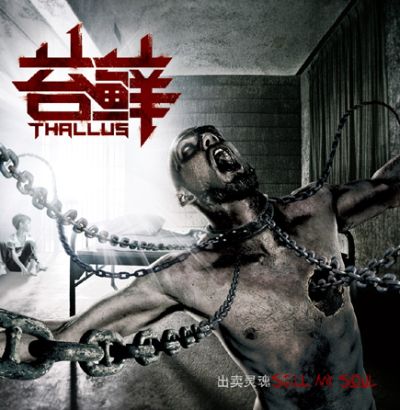
Zaphers' Second Review (Thallus, Sell My Soul, 2009)

| |


Oxymoron is a concept often entertained when hearing the term Melodic Death Metal. It is in some ways fair and just but in other cases just a narrow minded observation of a genre with a rich history. Granted that the Death Metal genre, a breed of music built on its repugnant riffs and equally repugnant subject matter, is not often known for its melody mainly because it has none. But as art is in a state of constant motion this changed, forging Melodic Death Metal attempting to add musicality to a genre that had the musicianship to handle it.

Delving deep into this genre will reveal Thallus and their 2009 album Sell My Soul. The band was first introduced to me under the name Moss with their sublime “Hail to Carcase”. I was initially disappointed whilst studying the track listing to see the song was noticeably absent. But the albums closing track “To Pay Tribute to the Dead” is a reworked version of the aforementioned song. It lacked the originals raw power and like the majority of the album sounded disconcertingly clean. The oxymoronic comparisons return to consciousness when the technically stunning guitar melodies stand side by side with the raspy Max Cavalera-esque vocals, evoking more of a jumbled mess of conflicting styles than a unified and tightly formed band. The transitions between the melodic guitar work and main riffs are rough despite their quality, they stand apart rather than compliment one another. 

The bands rhythm section also turns in a varied performance. The drums have a consistently strong sound but are equally mundane. At times they verge on painfully simple such as on track “Depression” the opening sees a reliance on double bass with the song patterned with simple beats before returning to the double bass work. The drums know their place on the album; they provide a powerful sounding undercurrent but fail to break through into anything of great talking point. It allows the guitars to take the place they deserve, stealing the albums praise with their constantly strong work. The bass serves as a close 4 stringed doppelganger to the drums work. But it at times succeeds in breaking through the mould and stuns with flurries of varied bass fills. The bass appears uniform until given its chance, where it stands as an equal to the guitars artistic flair, an unbalance in the album that is ignored with relish.

The albums track titles are a mystery. A mystery caused by the bands Eastern origin. Originating from China and singing in their mother tongue, a bold and respectable move from the band with countless bands choosing to sing in English over their own language. From a clueless Westerner perspective the lyrics are completely lost. The songs titles are the only clue into the songs subject matter. “Purgatory’s Gate” and “To Pay Tribute to the Dead” evoke epic imagery when compared to simple titles such as “Depression”. But the songs are all crafted in the exact same way. No emotion or imagery is built up in the music itself. The songs all have technical brilliancy but lack any feeling that could potentially portray the same thing that the lyrics might do. The lack of imagery in the music makes the language barrier more apparent. The bands power is in their twin guitar lead. The storytelling should be done trough them rather than the vocalist whose voice is distracting in a technically brilliant band. 

The band undeniably brings musicality into the Death Metal genre, but it is glaringly apparent that it is far from its origins. The melody stands apart from the heavier sections rather than them being interweaved as equals. Both sections are good, mainly on a technical level but they fail to gel and as a result do no compliment each other. They highlight the oxymoronic problems in the Melodic Death Metal genre. Melody and the furious style of Death Metal is a hard thing to blend. The band has elements of both and does them well, but they do not attempt to take advantage of the unique nature of this hybrid genre. They have the musicality and musicianship but something vital is notably absent.
Read more >>